

Recent
Most read


March 2020 will forever be known as a month in human history when almost all the schools in the world physically closed their doors to children and staff. According to Unesco, school closure globally increased from six countries on 1ÌýMarch to 185 countries on 31ÌýMarch. It’s been an unprecedented time around the world.Ìý
Although schools have physically shut, in most economically developed countries learning continues via a raft of distant (and often digital) learning activities. During the Easter break, caregivers will soon find themselves in very intense situations without the focus that online school has provided over the past weeks, without the normal routine and excitement of Easter, and without the ability to really experience what we might traditionally call a holiday.
Regardless of young people’sÌýage, Easter activities that involve elements of learning through play seem more relevant than ever. By this I mean that the activities are joyful, help children to find meaning in what they are doing or learning, andÌýinvolve active, engaged, hands-on andÌýiterative thinking (experimentation, hypothesis testing, and so on)Ìýas well asÌýsocial interaction (reimagined at a time of social distancing!).
These types of activities are open-ended and project-focused, butÌýoften sadly lacking in schools, due to time and imagination. They are, however, perfect for this new reality.
With the raft of education resources and ideas now littering the internet, it’s difficult to find what’s good and what is not, andÌýeven more so if you are not a trained educator.
Here are my five favourite tried-and-tested ideas from my friends at , and the LEGOÌýFoundation. These are easily accessible activitiesÌýthat provide opportunities for deep learningÌýby moving beyond fun to real engagement -Ìýperfect activities for what will seem like a longer than normal Easter holiday.
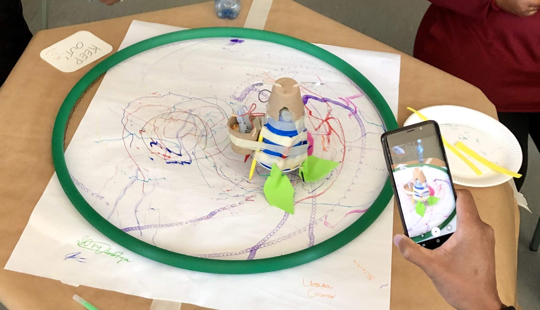
A scribbling machine is a motorised contraption that moves in unusual ways and leaves a mark to trace its path. It’s made from simple materials and demonstrates the erratic motion created by an offset motor. I like using harvested motors and switches from discarded toys and electronics and everyday objects like foil containers and paper cups in my creations.Ìý
Scratch is a free block-based programming language and online community for children where you can create your own interactive stories, games, and animations. In the time of Covid-19, the Scratch team hasÌýquickly built , whichÌýis full of creative ideas for home learning (and useful when we get back to school as well). Follow for more ideas appearing all the time.
Chain Reaction is an activity inspired by the whimsical contraptions of 20th-century cartoonists and inventors like Rube Goldberg, which oÂften revolved around devising an overly complicated way of accomplishing a simple task. You can make one by yourself, with the people in your house or virtually between households. TheÌýhas beenÌýtrending recently on Twitter.
Here's our attempt to play along and show a little about our family. Lots of work, but of course no arguing between siblings as we worked. 🤣🤣
— Ryan Harwood (he/his/him) (@rharwood17)
Storycity invites children to use local materials to create the buildings, neighbourhoods and the stories of #StoryCity, in their own collaboratively constructed and imagined city that lets children connect around the world. A beautifully simple idea and also a useful context to talk to children about the current situation.
 5.ÌýBuild a
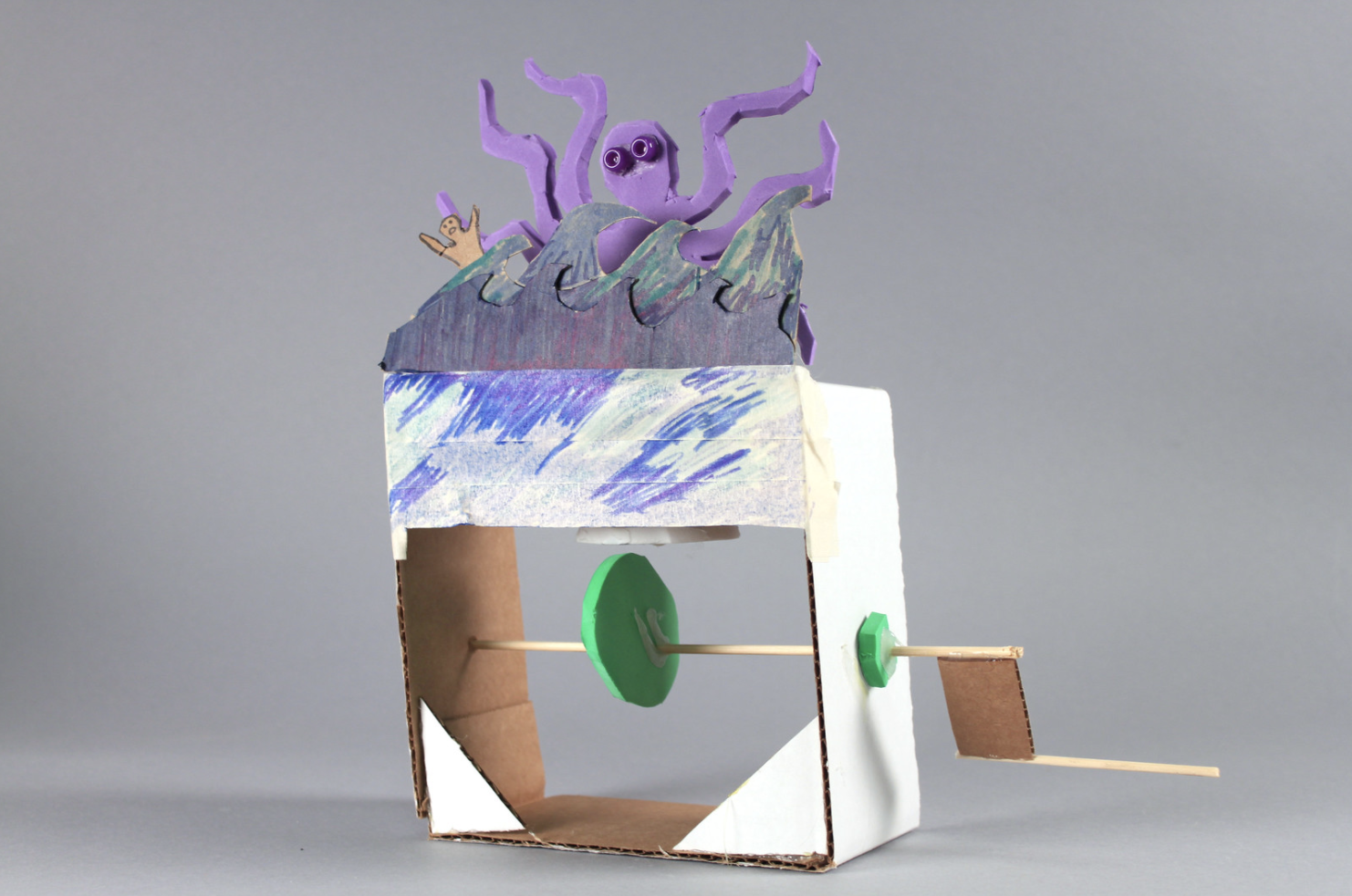
Cardboard Automata are a playful way to explore simple mechanical elements such as cams, leversÌýand linkages, while creating a moving sculpture. This activity is easy to start but may become more and more complex as you become familiar with possible motions and imagine ways to artistically decorate your contraption. Ìý
is the former headteacher of Kingussie High School in Scotland and currently director within the global programmes team at the LEGOÌýFoundation.ÌýHe tweets @olliebray